Sharpening Logbook
The Sharpening Logbook is More Than Just Documenting
The Sharpening Logbook is designed for people who want to take their sharpening to the next level. If you’ve sharpened before, you know that every new edge presents a new opportunity to learn. The Sharpening Logbook gives you a way to organize what you’ve learned and document your results. By documenting each time you sharpen, you can look back over time, appreciate your progress, but most importantly, learn from your prior successes and mistakes.
This logbook will help you track your progress and deepen your understanding of what works best during your sharpening sessions. Over time, the pages will become a record of your sharpening experience: the angles you’ve tested, the stones and systems you’ve used, the knives you’ve revived, and the satisfaction that comes from getting every edge just right.
And remember, you’re not doing this alone. As a Sharpening Supplies customer, you have Lifetime Product Support, which means we’re always available to help you troubleshoot, learn, and improve. We’ve got decades of experience testing the sharpeners we sell, and we’re constantly creating new videos, guides, and articles to share what we’ve learned.
Our Sharpening Experts are here to help you stay sharp. Literally and figuratively.
The Logbook
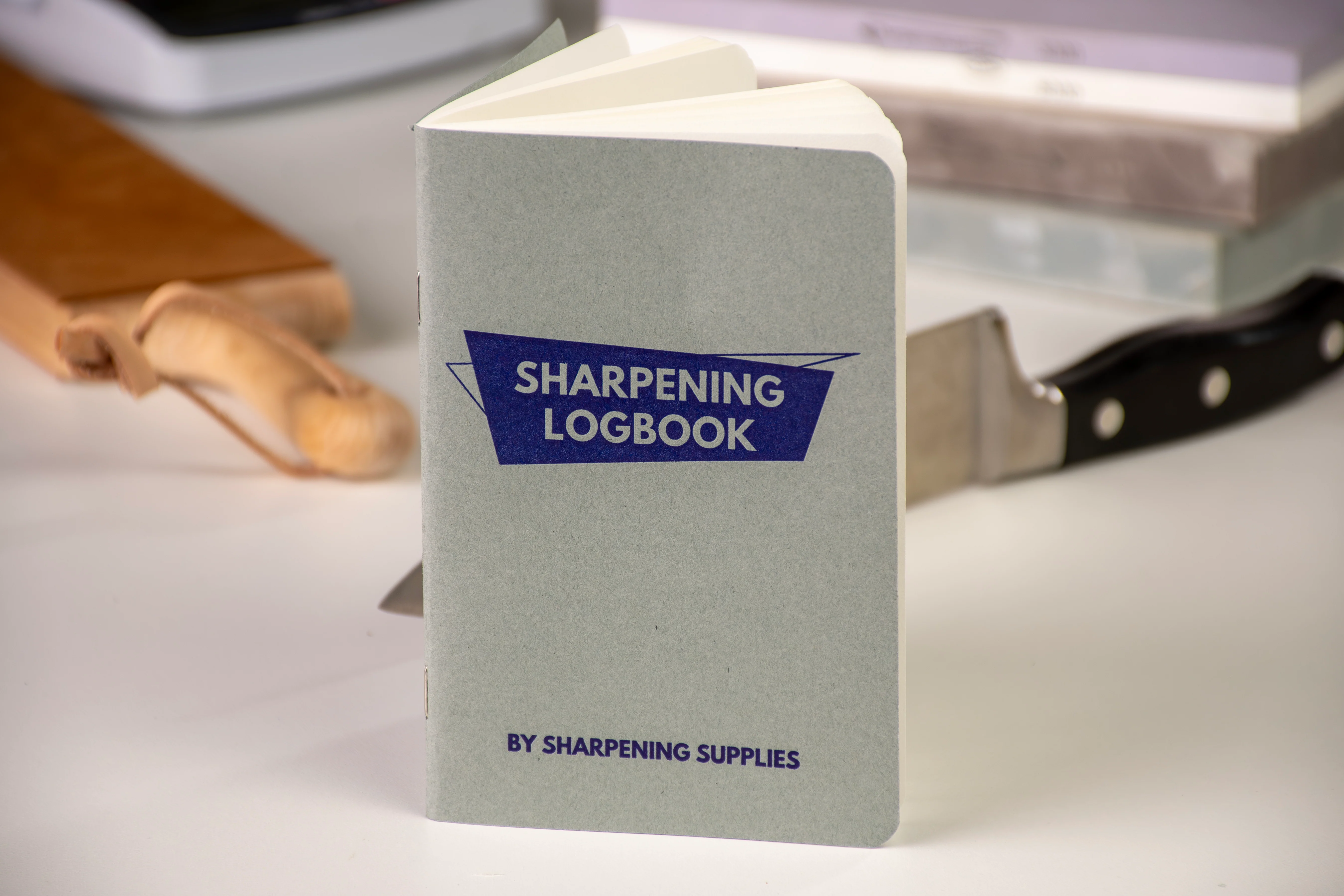
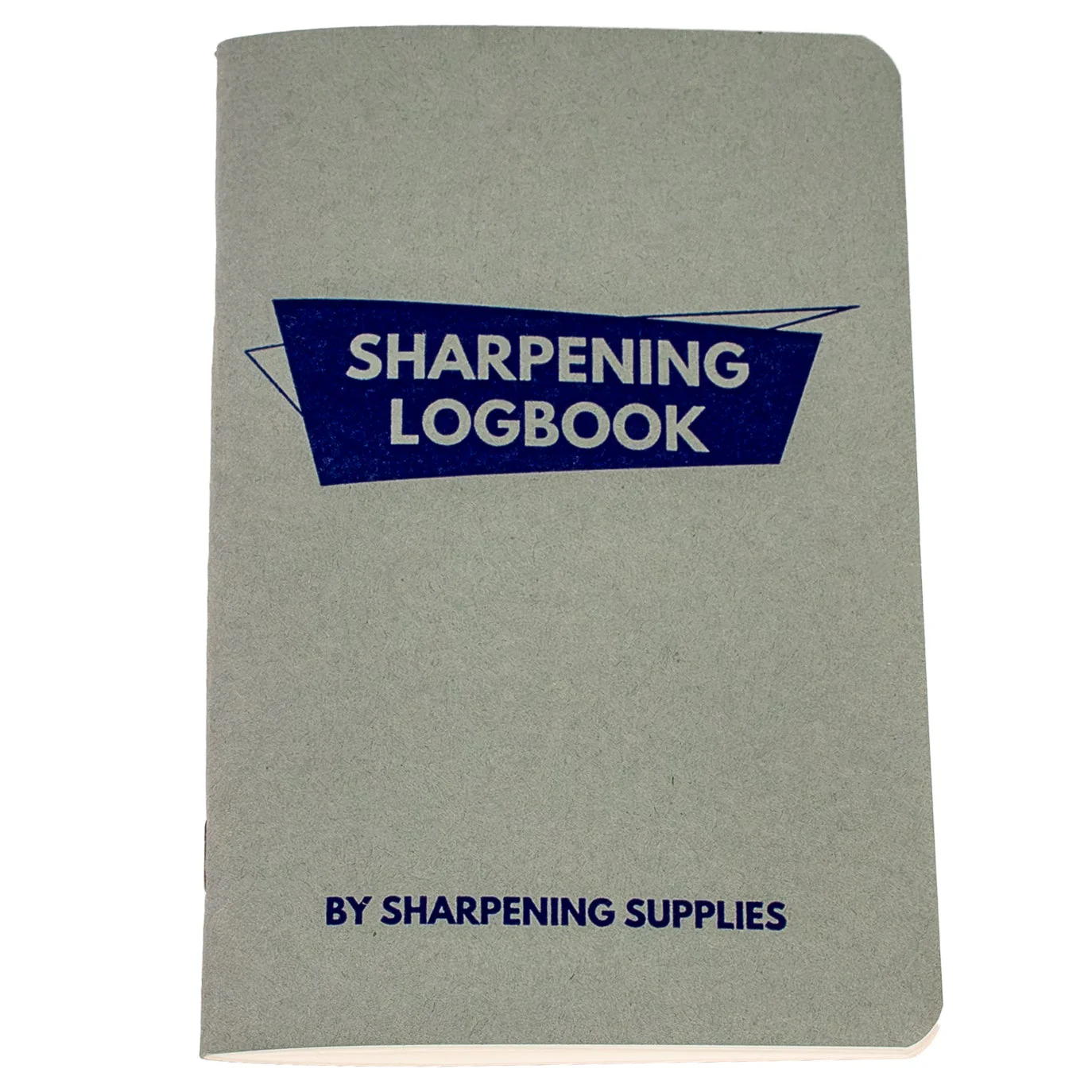
Pages: 52 (44 log pages, plus bonus information)
Size: 4” x 6”
Cover: Cardstock with letterpress printing
Bonus Content
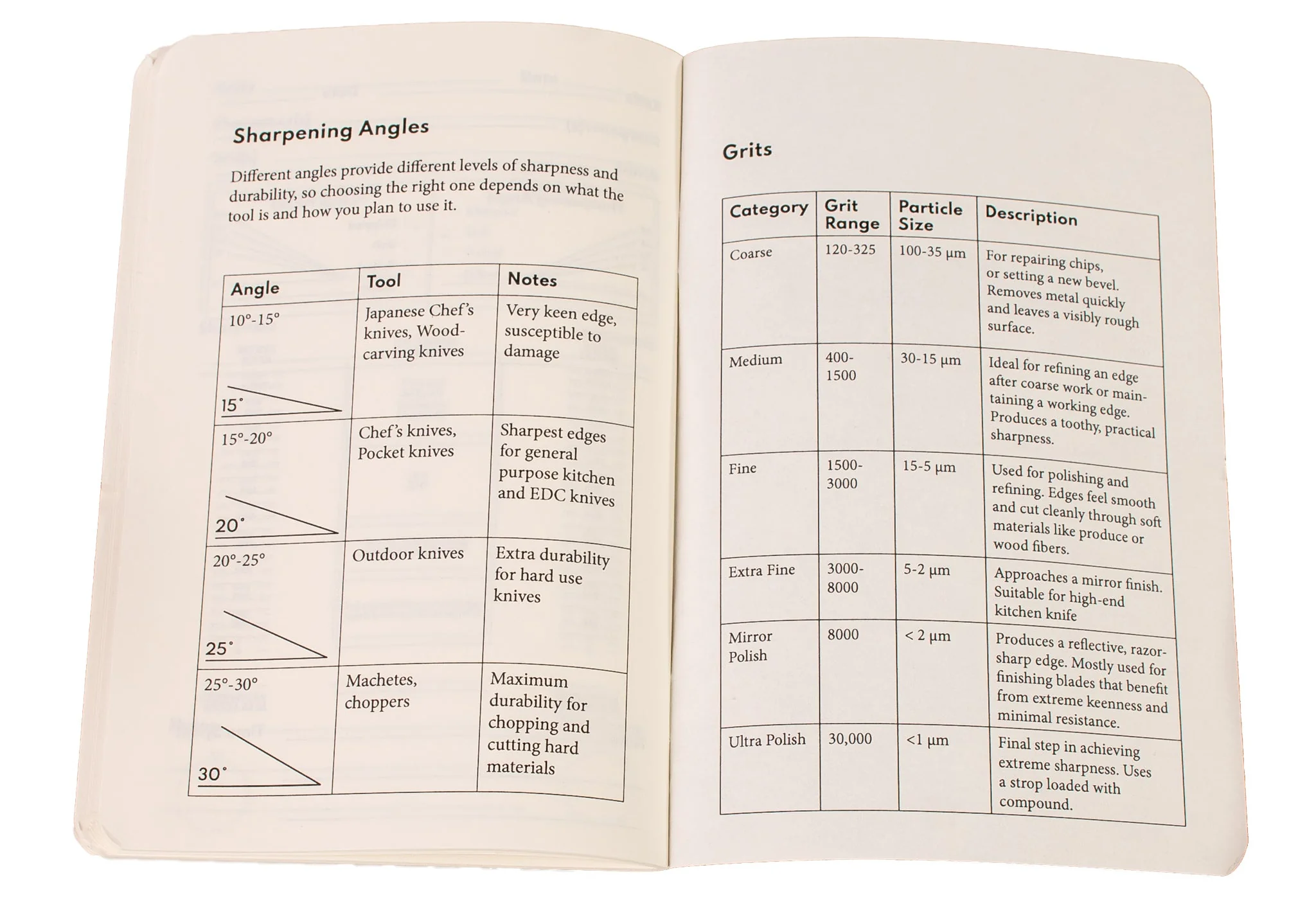
The final two pages of the logbook feature charts of angles and grits. These charts address some of the most common questions we receive. These charts of useful for beginners but also help advanced sharpeners gain a greater understanding of common sharpening questions.
How To Use
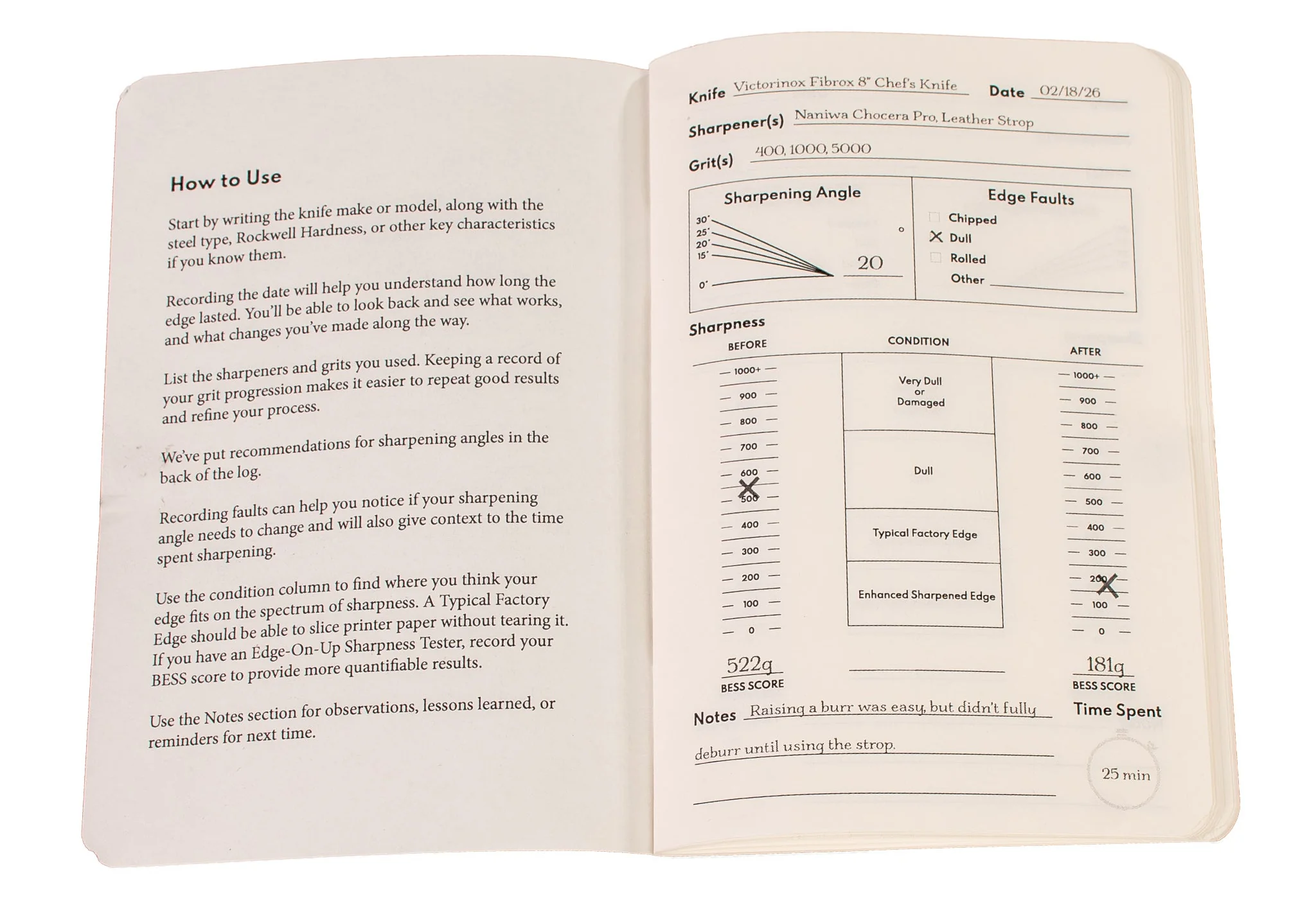
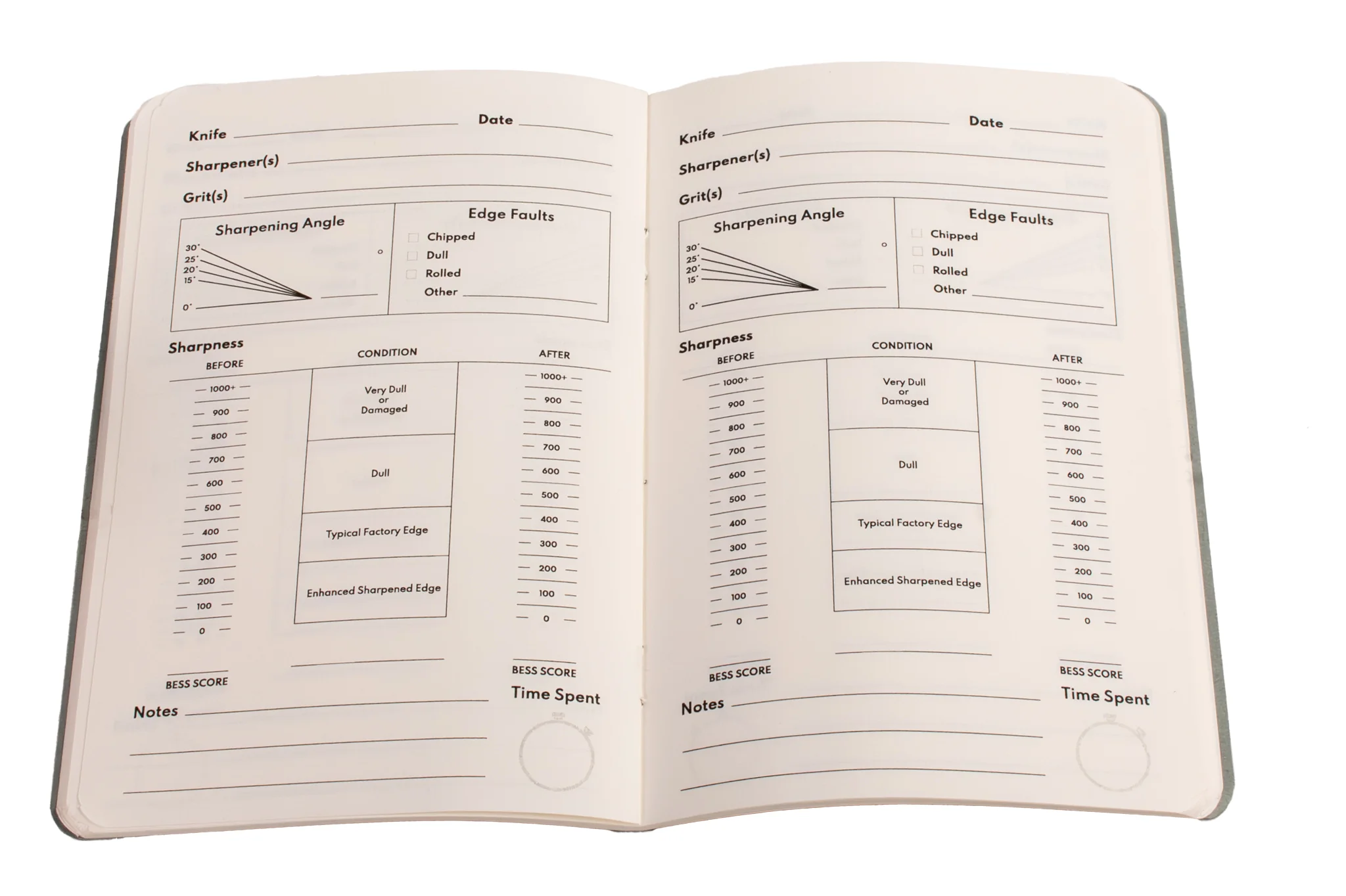
Start by writing the knife make or model, along with the steel type, Rockwell Hardness, or other key characteristics if you know them.
Recording the date will help you understand how long the edge lasted. You’ll be able to look back and see what works, and what changes you’ve made along the way.
List the sharpeners and grits you used. Keeping a record of your grit progression makes it easier to repeat good results and refine your process.
We’ve put recommendations for sharpening angles in the back of the log.
Recording faults can help you notice if your sharpening angle needs to change and will also give context to the time spent sharpening.
Use the condition column to find where you think your edge fits on the spectrum of sharpness. A Typical Factory Edge should be able to slice printer paper without tearing it.
If you have an Edge-On-Up Sharpness Tester, record your BESS score to provide more quantifiable results.
Use the Notes section for observations, lessons learned, or reminders for next time.
New Version On the Way
The first edition of our Sharpening Logbook has sold out, but we're working on another edition. Thank you to everyone that purchased our first run.
John Carmona
Founder - Sharpening Supplies
Product Information
Product Information
Shipping & Returns
Shipping & Returns
Sharpening Logbook
Sharpening Logbook
The Sharpening Logbook is More Than Just Documenting
The Sharpening Logbook is designed for people who want to take their sharpening to the next level. If you’ve sharpened before, you know that every new edge presents a new opportunity to learn. The Sharpening Logbook gives you a way to organize what you’ve learned and document your results. By documenting each time you sharpen, you can look back over time, appreciate your progress, but most importantly, learn from your prior successes and mistakes.
This logbook will help you track your progress and deepen your understanding of what works best during your sharpening sessions. Over time, the pages will become a record of your sharpening experience: the angles you’ve tested, the stones and systems you’ve used, the knives you’ve revived, and the satisfaction that comes from getting every edge just right.
And remember, you’re not doing this alone. As a Sharpening Supplies customer, you have Lifetime Product Support, which means we’re always available to help you troubleshoot, learn, and improve. We’ve got decades of experience testing the sharpeners we sell, and we’re constantly creating new videos, guides, and articles to share what we’ve learned.
Our Sharpening Experts are here to help you stay sharp. Literally and figuratively.
The Logbook
Pages: 52 (44 log pages, plus bonus information)
Size: 4” x 6”
Cover: Cardstock with letterpress printing
Bonus Content
The final two pages of the logbook feature charts of angles and grits. These charts address some of the most common questions we receive. These charts of useful for beginners but also help advanced sharpeners gain a greater understanding of common sharpening questions.
How To Use
Start by writing the knife make or model, along with the steel type, Rockwell Hardness, or other key characteristics if you know them.
Recording the date will help you understand how long the edge lasted. You’ll be able to look back and see what works, and what changes you’ve made along the way.
List the sharpeners and grits you used. Keeping a record of your grit progression makes it easier to repeat good results and refine your process.
We’ve put recommendations for sharpening angles in the back of the log.
Recording faults can help you notice if your sharpening angle needs to change and will also give context to the time spent sharpening.
Use the condition column to find where you think your edge fits on the spectrum of sharpness. A Typical Factory Edge should be able to slice printer paper without tearing it.
If you have an Edge-On-Up Sharpness Tester, record your BESS score to provide more quantifiable results.
Use the Notes section for observations, lessons learned, or reminders for next time.
New Version On the Way
The first edition of our Sharpening Logbook has sold out, but we're working on another edition. Thank you to everyone that purchased our first run.
John Carmona
Founder - Sharpening Supplies
Original: $9.99
-65%$9.99
$3.50Product Information
Product Information
Shipping & Returns
Shipping & Returns
Description
The Sharpening Logbook is More Than Just Documenting
The Sharpening Logbook is designed for people who want to take their sharpening to the next level. If you’ve sharpened before, you know that every new edge presents a new opportunity to learn. The Sharpening Logbook gives you a way to organize what you’ve learned and document your results. By documenting each time you sharpen, you can look back over time, appreciate your progress, but most importantly, learn from your prior successes and mistakes.
This logbook will help you track your progress and deepen your understanding of what works best during your sharpening sessions. Over time, the pages will become a record of your sharpening experience: the angles you’ve tested, the stones and systems you’ve used, the knives you’ve revived, and the satisfaction that comes from getting every edge just right.
And remember, you’re not doing this alone. As a Sharpening Supplies customer, you have Lifetime Product Support, which means we’re always available to help you troubleshoot, learn, and improve. We’ve got decades of experience testing the sharpeners we sell, and we’re constantly creating new videos, guides, and articles to share what we’ve learned.
Our Sharpening Experts are here to help you stay sharp. Literally and figuratively.
The Logbook
Pages: 52 (44 log pages, plus bonus information)
Size: 4” x 6”
Cover: Cardstock with letterpress printing
Bonus Content
The final two pages of the logbook feature charts of angles and grits. These charts address some of the most common questions we receive. These charts of useful for beginners but also help advanced sharpeners gain a greater understanding of common sharpening questions.
How To Use
Start by writing the knife make or model, along with the steel type, Rockwell Hardness, or other key characteristics if you know them.
Recording the date will help you understand how long the edge lasted. You’ll be able to look back and see what works, and what changes you’ve made along the way.
List the sharpeners and grits you used. Keeping a record of your grit progression makes it easier to repeat good results and refine your process.
We’ve put recommendations for sharpening angles in the back of the log.
Recording faults can help you notice if your sharpening angle needs to change and will also give context to the time spent sharpening.
Use the condition column to find where you think your edge fits on the spectrum of sharpness. A Typical Factory Edge should be able to slice printer paper without tearing it.
If you have an Edge-On-Up Sharpness Tester, record your BESS score to provide more quantifiable results.
Use the Notes section for observations, lessons learned, or reminders for next time.
New Version On the Way
The first edition of our Sharpening Logbook has sold out, but we're working on another edition. Thank you to everyone that purchased our first run.
John Carmona
Founder - Sharpening Supplies